

Views: 0 Author: Site Editor Publish Time: 2026-09-30 Origin: Site



Chemical composition: | Rechargeable NiMH Battery |
Battery category: | Portable battery |
Battery model: | HAAA600HT-B3JS |
Battery rating: | 3.6V 600mAh 2.16Wh |
Date of manufacture: | Refer to battery markings / label |
Battery weight: | Approx. 35 g |
Country of origin: | China |
Brand: | / |
Manufacturer's name: | JYH Technology Co., Ltd. |
Manufacturer's address: | 12, Bangmin Road, Jianghai District, Jiangmen City 529000, Guangdong province, China |
Manufacturer's website: | |
Manufacturer's email address: |
(EU) 2023/1542 declaration of conformity: |
MSDS: | |
Heavy Metals & Restricted Substances (Cd, Hg, Pb): | None |
Hazardous substances other than Cd, Hg, Pb: | Ni(OH)2 (CAS 12054-48-7), KOH (CAS 1310-58-3) |
Critical raw materials exceeding 0.1 % (w/w): | Ni |
The cell/battery subject to abusive conditions can cause damage to the cell/battery and/or personal injury. Please read and observe the standard battery precautions below before utilization.
Note 1: The customer is required to contact JYH in advance, if and when the customer needs other applications or operating conditions than those described in this document.
Note 2: JYH will take no responsibility for any accident when the cell/battery is used under other conditions than those described in this document.
Never solder onto cell directly.
Short circuit leading to cell terminals must be avoided.
Do not dispose of cell/battery into fire or dismantled under any condition.
Cell reversal is not permitted.
Store cell/battery out of the reach of babies and children.
Use cell/battery in extreme condition may affect the service life, such as deep cycle overcharge and over-discharge.
If cell/battery leak fluid, change color, change shape, or change in any other way, stop using immediately.
Do not mix different cell types and capacities in the same battery assembly.
Never deform the positive terminal of cell or cover or obstruct its gas release structure.
Do not remove the outer tube from a cell/battery or damage it. Doing so will expose the cell/battery to the risk of a short circuit, and may cause leakage of battery fluid, heat generation, explosion and fire.
Do not apply water, seawater or other oxidizing reagents onto cells/batteries, as this can cause rust and heat generation. If a cell/battery becomes rusted, the gas release vent may no longer operate, and can result in explosion.
Charging: 0℃ to + 55℃
Discharging: -15℃ to +70℃
Storage Recommendations: -20℃ to +30℃, low humidity and no corrosive gas atmosphere.
Usable Extinguishing Agent: Class D fire extinguisher (for metal fires), Dry powder, CO2, or Water spray.

Prohibited Extinguishers: Do NOT use halogenated fire extinguishers.
Emergency Measures: In case of cell heating, swelling, leakage, or smoke, immediately isolate the battery, ventilate the room, and use personal protective equipment.
First Aid Measure: Cells/batteries contain a strong colorless alkaline solution. The alkaline solution is extremely corrosive and will cause skin and eyes damage. If the skin or clothing comes in contact with fluid from cells/batteries, thoroughly wash the area immediately with clean water. If any fluid from cells/batteries comes in contact with user’s eyes, they should immediately flush their eyes and wash them thoroughly with clean water and consult a doctor urgently.
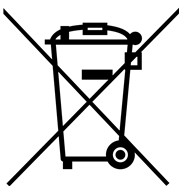
Disposal Marking Symbol (Crossed-out Wheeled Bin):
The symbol showing a crossed-out wheeled bin indicates that this battery must NOT be disposed of with unsorted household waste. It must be collected separately at the end of its lifecycle to support critical raw material recycling.
Terminal Insulation: Always cover both positive (+) and negative (-) terminals with non-conductive electrical tape prior to transport or collection to prevent accidental short circuits.
Store used batteries in a well-ventilated, dry container away from flammable materials.
End-users are obligated to return waste batteries through official channels free of charge:
Municipal Collection Points: Return to designated local municipal recycling facilities.
Retail/Distributor Take-back: Return at retail locations providing battery drop-off boxes.
Industrial System Take-back: Contact the system installer or authorized Producer Responsibility Organization (PRO) under local national EPR regulations.


