


Tel: +86-750-3806863
Email: sales@jyh-battery.com
Email: sales@jyh-battery.com
12, Bangmin Road, Jianghai District,Jiangmen City, Guangdong Province, P.R.China 529000
Views: 0 Author: Site Editor Publish Time: 2026-08-07 Origin: Site


Emergency light batteries are the unsung backbone of safety infrastructure. When power fails, these batteries are the only thing standing between a lit exit path and complete darkness. Yet despite their critical role, battery failures remain one of the most reported causes of emergency lighting system breakdowns.
Understanding the specific failure modes—and matching the right battery chemistry to each application—directly reduces system downtime and maintenance costs. This article covers the most common problems affecting emergency light batteries across three high-demand applications, and explains how LiFePO4 technology addresses each one.、
Emergency light batteries fail for a predictable set of reasons. Some are chemistry-related. Others stem from environment, charging behavior, or simply age. The problems below appear repeatedly across nearly every emergency lighting deployment.
Capacity Fade Over Time
All rechargeable batteries lose usable capacity with each charge-discharge cycle. In emergency lighting, this means the battery may appear charged during routine testing but deliver far less runtime during an actual emergency. Traditional NiCd and NiMH batteries typically show significant capacity fade after 300–500 cycles.
Temperature Sensitivity
Emergency lighting equipment is often installed in spaces with little climate control—stairwells, parking garages, utility rooms, and outdoor enclosures. At temperatures below 0°C, many lithium-ion and NiMH batteries lose 20–40% of their usable capacity. High heat accelerates electrolyte degradation and shortens overall service life.
Memory Effect
NiCd batteries, still common in older emergency lighting systems, suffer from memory effect when repeatedly partially discharged before recharging. Over time, the battery "remembers" the shorter discharge cycle and refuses to deliver its full rated capacity.
Slow or Incomplete Recharging
Emergency lighting systems often recharge batteries from a low-power float charger after a discharge event. If the battery chemistry is poorly matched to the charger, or if the battery has aged, recharge times lengthen—leaving the system under-prepared for consecutive outages.
Cell Imbalance in Multi-Cell Packs
Battery packs made up of multiple cells can develop imbalances where individual cells degrade at different rates. A single weak cell limits the performance of the entire pack, even if the remaining cells are healthy.
The shift toward LiFePO4 (lithium iron phosphate) chemistry has addressed many of the problems above. The following table summarizes how LiFePO4 performs against traditional chemistries across three core emergency lighting applications.
Application | Key Battery Problem | Traditional Chemistry Limitation | LiFePO4 Advantage |
|---|---|---|---|
Emergency Communication Terminals | Frequent cycling, continuous standby drain | NiCd memory effect, short cycle life | 2,000+ cycles, flat discharge curve |
Solar Trackers | Wide temperature swings, irregular charging | NiMH capacity loss in cold/heat | Stable -20°C to 60°C operation |
Outdoor Security Lighting | Exposure to heat, moisture, and vibration | Li-ion thermal instability | High thermal stability, no thermal runaway risk |
Emergency communication terminals operate in a near-constant standby state, drawing small amounts of current around the clock while remaining ready for sudden, high-demand activation. This pattern—shallow cycling at high frequency—accelerates degradation in NiCd and NiMH cells.
Systems built around emergency communication terminals LiFePO4 battery configurations benefit from a cycle life that typically exceeds 2,000 full charge-discharge cycles. The chemistry also maintains a flatter discharge voltage curve, which means communication electronics receive stable voltage throughout the discharge event rather than experiencing performance degradation as the battery depletes.
Solar tracker systems present a unique challenge: the battery must accept charging energy that varies based on sunlight availability, store it efficiently, and discharge reliably regardless of ambient temperature. Cloudy days produce partial charges. Winter nights in colder climates push ambient temperatures well below freezing.
A Solar Tracker LiFePO4 battery handles both scenarios more reliably than NiMH alternatives. LiFePO4 chemistry tolerates partial-state-of-charge operation without the sulfation or capacity loss that affects lead-acid batteries, and it maintains greater than 80% capacity at -20°C—a critical threshold for deployments in northern climates or high-altitude installations.
Charge efficiency also improves. LiFePO4 cells typically achieve 95–99% coulombic efficiency, meaning nearly all energy captured from a solar panel gets stored and returned. NiMH efficiency sits closer to 66%.
Outdoor security lighting faces the harshest physical environment of the three applications. Batteries are exposed to daily temperature swings, direct solar heating of enclosures, moisture ingress, and physical vibration from wind, traffic, or nearby machinery.
The critical concern in this environment is thermal stability. Standard lithium-ion batteries carry a risk of thermal runaway when exposed to elevated temperatures or physical damage. An Outdoor Security LiFePO4 battery eliminates this risk—LiFePO4's olivine crystal structure remains chemically stable even at temperatures above 60°C, making it the preferred chemistry for unattended outdoor enclosures.
JYH Technology's outdoor-rated LiFePO4 cells are tested against IEC62620 standards and are designed to charge and discharge reliably across a wide operating range. For details on specific models suited to outdoor security applications, visit www.jyh-battery.com.
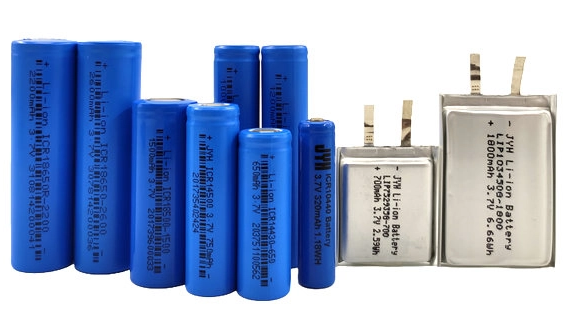
Battery failure in emergency lighting is rarely sudden—it accumulates gradually through chemistry mismatch, environmental stress, and normal aging. Identifying which failure mode applies to a given installation is the first step toward specifying a more durable solution.
LiFePO4 chemistry addresses the dominant failure modes across all three of the high-demand applications covered in this article: cycle life limitations in communication terminals, temperature sensitivity in solar-powered trackers, and thermal instability in outdoor security enclosures. The evidence for this shift is increasingly documented in both field performance data and international standards adoption.
For procurement teams and system designers evaluating battery options, the clearest path to lower long-term maintenance costs is matching chemistry to application requirements from the start—rather than discovering a mismatch after the first emergency event. To summarize: emergency communication terminals LiFePO4 battery configurations extend cycle life and stabilize voltage under high-frequency standby use; Solar Tracker LiFePO4 battery systems sustain reliable operation through temperature extremes and variable charging inputs; and Outdoor Security LiFePO4 battery solutions deliver the thermal and chemical stability required for unattended outdoor deployments. Learn more about JYH Technology's full range of LiFePO4 solutions at www.jyh-battery.com.
Can LiFePO4 batteries fully replace NiCd in existing emergency lighting systems?
In most cases, yes—provided the charger voltage and current profile are compatible with LiFePO4 specifications. Direct drop-in replacement requires verifying that the existing charger supports LiFePO4 charge termination logic. Mismatched chargers can undercharge or damage cells over time.
At what temperature does LiFePO4 performance become unreliable?
Standard LiFePO4 cells begin to show measurable capacity reduction below -10°C. Low-temperature variants, such as those produced by JYH Technology, maintain over 80% capacity at -20°C and can charge safely at temperatures as low as -30°C without heating components.
Do LiFePO4 batteries require special maintenance?
LiFePO4 batteries require significantly less maintenance than NiCd alternatives. They do not suffer from memory effect and do not need periodic full discharge cycles. Routine testing of actual runtime under load remains the most reliable indicator of battery health.
Are there compliance standards specific to emergency lighting batteries?
Yes. In the United States, UL924 covers emergency lighting equipment and associated batteries. Internationally, IEC62620 governs the use of secondary lithium cells in industrial applications, including emergency lighting. LiFePO4 cells from reputable manufacturers are tested against these standards.
Does depth of discharge affect LiFePO4 cycle life significantly?
Yes. Limiting discharge to 80% depth of discharge (DOD) rather than 100% DOD can more than double total cycle life. For emergency lighting applications where the battery operates in standby most of the time, typical real-world discharge depths are well within this range.


