

Views: 0 Author: Site Editor Publish Time: 2026-06-02 Origin: Site


Harsh climates rapidly destroy ordinary power sources. When temperatures plummet below freezing, chemical reactions slow down, leaving your devices without power. When the heat rises, delicate internal components degrade, creating severe safety risks.
Choosing the right power source prevents these catastrophic failures. Energy storage systems face incredible stress in outdoor environments, off-grid locations, and emergency applications. A power failure in a medical device or a grid backup system causes more than just an inconvenience. It halts critical operations completely.
Understanding the distinct differences between basic consumer cells and industrial-grade alternatives allows you to build more resilient hardware. This guide explains how specialized chemistry keeps equipment running smoothly, regardless of the environmental conditions outside.
A rechargeable battery stores and releases electrical energy through reversible chemical reactions. Inside the casing, lithium ions move back and forth between two electrodes—the anode and the cathode. An electrolyte solution acts as the pathway for these ions to travel.
When you charge the device, ions flow from the cathode to the anode, storing energy. When you power up your equipment, the ions flow back to the cathode, releasing electricity. This continuous cycle works perfectly well in a climate-controlled room. However, the electrolyte solution is highly sensitive to external environmental shifts.
According to battery chemistry principles, temperature directly dictates how easily these ions can move. If the environment changes drastically, the internal resistance of the cell increases. This resistance forces the system to work harder, ultimately damaging the internal structure and reducing the total lifespan of the unit.
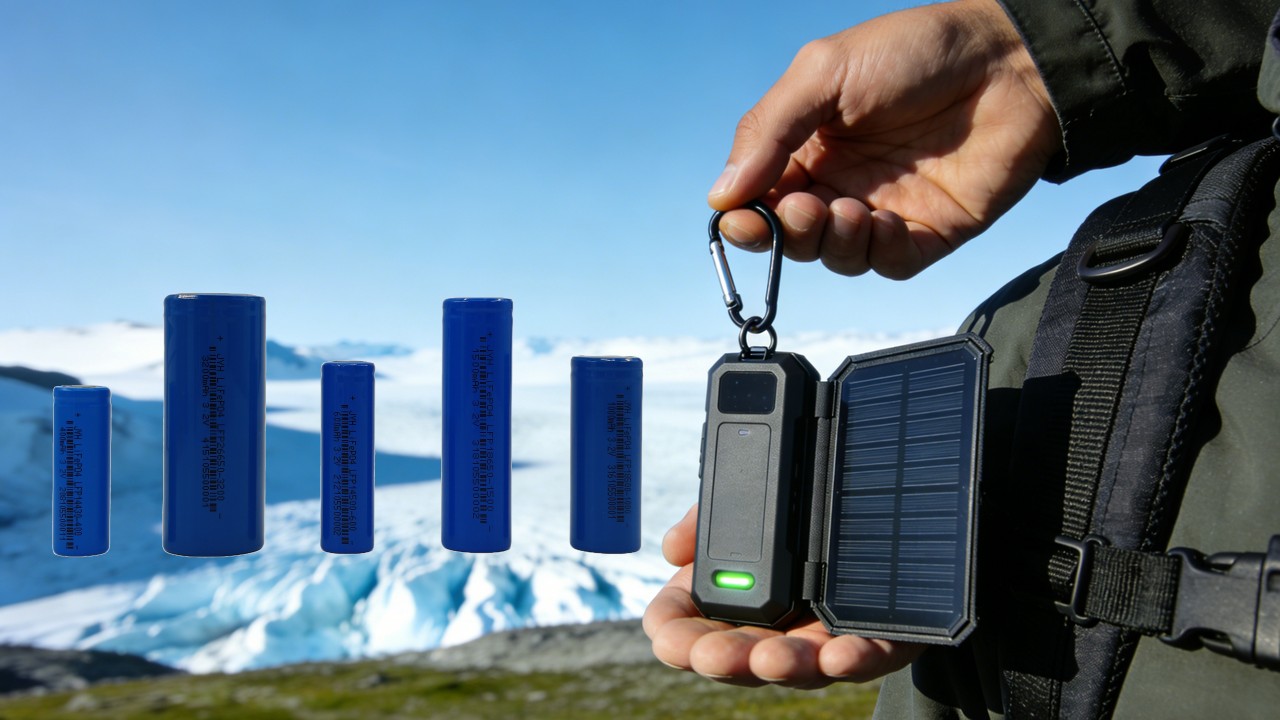
A Standard Cell typically operates safely only within a narrow thermal window, usually between 0°C and 45°C (32°F to 113°F). Outside of this comfortable zone, performance drops significantly.
In cold weather, the liquid electrolyte inside a standard unit thickens. This thickening slows down ion mobility. If you attempt to charge a standard lithium-ion unit below freezing, lithium plating occurs. Lithium plating means metal builds up on the anode rather than absorbing into it, which permanently reduces capacity and can cause internal short circuits.
Conversely, extreme heat accelerates the degradation of the internal materials. High heat causes the electrolyte to break down and generate gas. This gas buildup leads to swelling, leakage, or thermal runaway. Because of these chemical limitations, a standard cell remains suitable only for indoor consumer electronics, smartphones, and climate-controlled backup systems.
A wide temperature battery utilizes specialized electrolytes and robust electrode materials designed to withstand severe thermal stress. These specialized units maintain high conductivity in the cold and resist breakdown in extreme heat.
Manufacturers engineer these cells for demanding industrial applications. For example, according to specifications from [JYH Technology, 2026], high-temperature LiFePO4 batteries can charge and discharge at temperatures up to 85°C. They also comply with IEC62620 standards and support permanent charging at 60°C.
On the opposite end of the spectrum, low-temperature LiFePO4 variants safely charge at -40°C without introducing safety risks. They achieve this performance without requiring any external heating components. Furthermore, Lithium Titanate (LTO) models offer a 100% depth of discharge cycle life exceeding 10,000 cycles while remaining fully operational at -40°C [JYH Technology, 2026]. These capabilities make them ideal for emergency lighting setups, GPS trackers, and off-grid solar storage.
To highlight the functional differences, the table below outlines how these two categories compare across essential metrics.
Feature | Standard Cell | Wide Temperature Battery |
|---|---|---|
Operating Range (Discharge) | 0°C to 45°C | -40°C to 85°C |
Cold Weather Charging | Fails below 0°C (requires heating) | Charges safely at -40°C |
High Heat Tolerance | Degrades rapidly above 45°C | Withstands continuous use up to 85°C |
External Heating Needed? | Yes, in cold environments | No heating components required |
Typical Lifespan | 500 to 1,000 cycles | Up to 10,000 cycles (LTO chemistry) |
Best Applications | Indoor electronics, laptops, phones | Emergency lights, outdoor GPS, telecom |
Selecting the right power source depends entirely on your deployment environment.
Choose a Standard Cell if your project remains strictly indoors within a climate-controlled building. They cost less to manufacture and provide excellent energy density for everyday consumer electronics.
Choose a wide temperature battery if your equipment operates outdoors, in sub-freezing environments, or near high-heat machinery. For instance, if you manufacture UL924 compliant emergency exit signs, you must select a battery capable of surviving harsh facility conditions without failing during a crisis. JYH Technology provides dedicated UL924 compliant LiFePO4 cells that easily handle these exact requirements.
A specialized low-temperature LiFePO4 battery can typically discharge and charge safely in environments as cold as -40°C. Even at -20°C, these units retain more than 80% of their total capacity without suffering permanent damage.
No. High-quality extreme climate batteries do not require external heating blankets or internal warming components. Their advanced chemical composition allows them to function naturally in freezing environments, simplifying product design and reducing overall power consumption.
Industries operating in unpredictable environments rely heavily on these specialized cells. Key sectors include telecommunications, outdoor solar lighting, emergency lighting and signage, fleet GPS tracking, and military hardware.
Hardware failures in remote locations cause massive logistical headaches. By choosing a power source engineered for environmental extremes, you eliminate the most common point of failure in outdoor equipment. Whether you are building emergency signage or off-grid telecom towers, matching your cell chemistry to your climate ensures long-term operational success.
You can explore a complete catalog of industrial-grade power solutions, including LiFePO4, NCM, and LTO chemistries, by visiting www.jyh-battery.com. Their engineering teams offer comprehensive battery assembly services tailored to withstand the harshest environments on the planet.
Quick answer: A wide temperature battery utilizes specialized electrolytes and electrode materials to operate safely in extreme environments (-40°C to 85°C) without external heating. In contrast, a Standard Cell typically fails, degrades, or requires warming blankets when pushed outside its narrow thermal window of 0°C to 45°C.


