

Views: 0 Author: Site Editor Publish Time: 2026-07-10 Origin: Site


Battery technology sits at the center of the global clean energy transition. As demand for reliable, long-lasting energy storage grows across industries—from emergency lighting to electric vehicles—engineers and procurement teams are asking harder questions about what goes into a battery, and what happens when it comes out. Choosing the right chemistry involves more than performance specs. Environmental impact matters too.
Three battery types frequently come up in these conversations: lithium polymer batteries, lithium titanate batteries, and broader power lithium battery formats. Each carries a different environmental profile. Understanding those differences helps engineers, system designers, and procurement teams make more informed sourcing decisions—and potentially reduce the long-term ecological footprint of the systems they build.
Lithium polymer batteries use a solid or gel-like polymer electrolyte instead of a liquid one. This design allows manufacturers to produce cells in virtually any shape or thickness, making LiPo batteries common in consumer electronics, drones, wearables, and compact portable devices.
From an environmental standpoint, LiPo batteries carry a mixed record. On the positive side, their lightweight construction reduces material use per watt-hour of storage. Less weight generally means less raw material mining and lower transport emissions across a product's lifecycle.
The concern lies in their chemistry. Many LiPo cells use nickel-cobalt-manganese (NCM) or nickel-cobalt-aluminum (NCA) cathode materials. Cobalt extraction is energy-intensive and linked to significant ecological disruption in mining regions. Cycle life is another variable—most LiPo cells deliver 300 to 500 charge cycles under typical conditions, meaning they require more frequent replacement than longer-lived alternatives. More replacements translate directly to more manufacturing, more raw material extraction, and more end-of-life waste.
Thermal runaway is also a consideration. LiPo batteries can be prone to swelling and, under certain failure conditions, combustion. The consequences for both environmental safety and user safety make proper disposal and containment infrastructure essential.
Lithium titanate batteries replace the conventional graphite anode with lithium titanate (Li₄Ti₅O₁₂, or LTO). This single material substitution changes the environmental calculus significantly.
Cycle life is the most compelling factor. LTO batteries from manufacturers like JYH Technology achieve more than 10,000 charge cycles at 100% depth of discharge (DOD). Compare that to 500–1,000 cycles for standard lithium-ion cells. Fewer replacement cycles mean fewer batteries manufactured, fewer raw materials consumed, and less end-of-life waste generated over a system's operational lifetime.
Thermal stability is another meaningful advantage. LTO cells operate safely across a wide temperature range—charging and discharging effectively down to -40°C, with no heating components required. This stability reduces the risk of thermal runaway, making LTO batteries safer to handle, transport, and dispose of. Lower fire risk also means fewer chemical contamination events in the case of battery failure.
Cobalt-free chemistry removes one of the most environmentally problematic materials from the supply chain. LTO batteries do not require cobalt, sidestepping the ecological and ethical concerns associated with its extraction.
Fast charging capability is another environmental benefit that often goes unnoticed. LTO cells can accept high charge rates without the lithium plating degradation that shortens the life of graphite-anode cells. This extends functional lifespan further and reduces total energy lost to heat during charging.
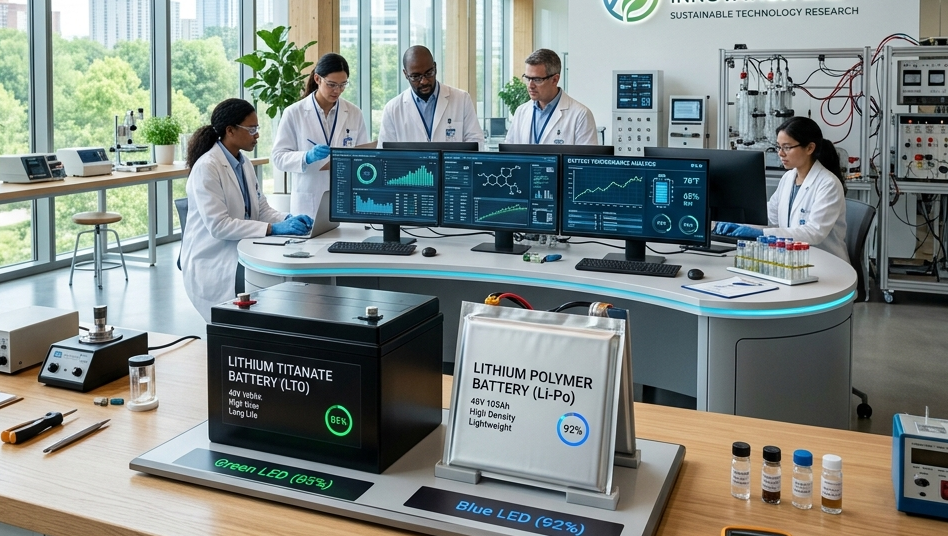
The term "power lithium battery" typically refers to lithium-ion or LiFePO4 cells optimized for high discharge rates—used in applications such as power tools, electric vehicles, grid storage, and industrial equipment. LiFePO4 (lithium iron phosphate) is the dominant chemistry in this segment.
LiFePO4 batteries hold a meaningful environmental advantage over cobalt-based lithium chemistries. Iron and phosphate are both more abundant and less ecologically damaging to mine than cobalt or nickel. Thermal stability is also superior to NCM chemistries, reducing fire risk.
Cycle life for LiFePO4 typically falls between 2,000 and 4,000 cycles—significantly better than LiPo cells, though still below LTO. For high-energy-demand applications where capacity and cost efficiency take priority over maximum longevity, LiFePO4 remains one of the cleaner choices available.
JYH Technology's LiFePO4 lineup includes cells rated for operation at temperatures from -20°C up to 85°C, with options compliant with IEC62620 and UL924 standards—relevant for emergency lighting and outdoor deployments where reliability and safety directly affect environmental risk.
Feature | Lithium Polymer (LiPo) | Lithium Titanate (LTO) | Power Lithium (LiFePO4) |
|---|---|---|---|
Typical Cycle Life | 300–500 cycles | 10,000+ cycles | 2,000–4,000 cycles |
Cobalt Content | Often yes (NCM/NCA) | No | No |
Thermal Stability | Moderate | Excellent | Good |
Low-Temp Performance | Limited | -40°C capable | -20°C capable |
Fire/Runaway Risk | Higher | Very low | Low |
Replacement Frequency | High | Very low | Moderate |
Primary Use Cases | Consumer electronics, drones | Industrial, cold-climate, UPS | EVs, grid storage, emergency lighting |
The answer depends on the application, but the evidence points clearly toward LTO for long-term environmental performance. A battery that lasts 10,000+ cycles and avoids cobalt will, over a full system lifetime, generate far less waste and require significantly fewer raw material inputs than shorter-lived alternatives.
For applications where cycle longevity and temperature resilience matter—cold climate energy storage, industrial backup power, emergency lighting systems—LTO delivers the lowest lifecycle environmental burden. LiFePO4 is the better-balanced choice for high-capacity applications where upfront cost and energy density are primary constraints. LiPo batteries remain practical for lightweight consumer applications but carry a higher environmental cost per year of use.
Choose LTO if cycle life and temperature stability matter more than upfront cost or energy density. Choose LiFePO4 if capacity and cost-efficiency are the primary drivers. Avoid cobalt-heavy LiPo chemistries for applications where long service life is expected.
Yes. Lithium titanate batteries are among the more environmentally responsible options in the lithium battery category. Their cobalt-free chemistry, ultra-long cycle life exceeding 10,000 cycles, and low thermal runaway risk all contribute to a reduced environmental footprint over a system's operational life.
A battery with a longer cycle life needs to be replaced less often. Each replacement requires new raw material extraction, manufacturing energy, and disposal of the old unit. A battery lasting 10,000 cycles generates far less cumulative waste than ten 1,000-cycle batteries performing the same role.
Many lithium polymer batteries use NCM or NCA cathode materials, which contain cobalt. Cobalt mining carries significant ecological and supply chain concerns. LTO and LiFePO4 chemistries avoid cobalt entirely, making them preferable from a sourcing standpoint.
Yes. LTO batteries from JYH Technology operate at temperatures as low as -40°C without requiring heating components, delivering over 60% capacity at -40°C and over 80% at -20°C. This makes them suitable for Arctic monitoring, outdoor storage, and cold-climate industrial applications without the added energy cost of thermal management systems.
Relevant certifications include ISO 9001 for quality management, IEC62620 for industrial lithium cell performance, and UL924 for emergency lighting applications. JYH Technology holds these certifications and conducts comprehensive cell-level and pack-level safety testing across its product lines.
Lithium polymer batteries offer design flexibility but carry environmental costs tied to short cycle life and cobalt-containing chemistries. Power lithium batteries—particularly LiFePO4—strike a reasonable balance between performance and sustainability. Lithium titanate batteries, with their 10,000+ cycle lifespan, cobalt-free construction, and wide operating temperature range, present the strongest environmental case of the three when evaluated across a full system lifecycle. For teams sourcing batteries for demanding, long-duration applications, LTO deserves serious consideration—not just for its technical performance, but for the cumulative environmental load it avoids over time. Learn more about JYH Technology's lithium titanate and LiFePO4 battery solutions at www.jyh-battery.com.
TL;DR: Lithium titanate (LTO) batteries offer strong environmental credentials compared to other lithium chemistries. Their ultra-long cycle life—exceeding 10,000 charge cycles—reduces replacement frequency and manufacturing waste. Combined with the absence of cobalt and stable thermal behavior, LTO batteries represent one of the cleaner options across the power lithium battery landscape, though no battery chemistry is entirely without environmental trade-offs.


