


Tel: +86-750-3806863
Email: sales@jyh-battery.com
Email: sales@jyh-battery.com
12, Bangmin Road, Jianghai District,Jiangmen City, Guangdong Province, P.R.China 529000
Views: 0 Author: Site Editor Publish Time: 2026-09-22 Origin: Site


Cold warehouses, sun-scorched equipment enclosures, and remote sensor networks all share one demand: power that doesn't quit when conditions turn hostile. Standard cell chemistries often lose capacity, degrade faster, or fail outright once temperatures swing to the extremes. That gap has pushed engineers toward chemistries built specifically for punishment.
A lithium titanate battery is one of the few rechargeable options that keeps working reliably when everything around it is working against it. Instead of relying on a graphite anode like most lithium-ion cells, this chemistry uses lithium titanate oxide, which changes how the cell handles temperature stress, charge cycles, and long-term wear. The result is a battery that behaves predictably in conditions that would degrade conventional cells within months.
This post looks at what makes the chemistry different, how it performs in cold storage logistics, and why it's becoming a preferred choice for field sensor equipment operating far from easy maintenance.

The anode material is the defining difference. Lithium titanate oxide has a spinel crystal structure that stays stable through repeated charge and discharge cycles, which is why this chemistry supports far higher cycle counts than graphite-based alternatives. According to JYH Technology, a lithium titanate battery can achieve more than 10,000 cycles at 100% depth of discharge, a figure that would exhaust most other lithium chemistries several times over.
That structural stability also reduces the risk of lithium plating, a common failure mode when standard lithium-ion cells are charged in cold conditions. Plating not only shortens lifespan, it can create safety hazards. LTO cells largely sidestep this problem, which is part of why they've found a home in applications where failure isn't an option.
Cold storage and pharmaceutical logistics operate under tight thermal windows, and the equipment monitoring those windows can't afford power interruptions. A Cold Chain Lithium Titanate battery is built to charge and discharge in sub-zero environments without the safety risks or heating components that many other cold-rated cells require. JYH Technology reports that its LTO cells maintain more than 80% capacity at -20°C, and cycle life testing remains acceptable even at -40°C.
That performance matters in freezer trucks, refrigerated containers, and vaccine storage units, where a temperature excursion can spoil an entire shipment. Removing the need for internal heating elements also simplifies design, cuts weight, and reduces points of potential failure in equipment that already has enough variables to manage.
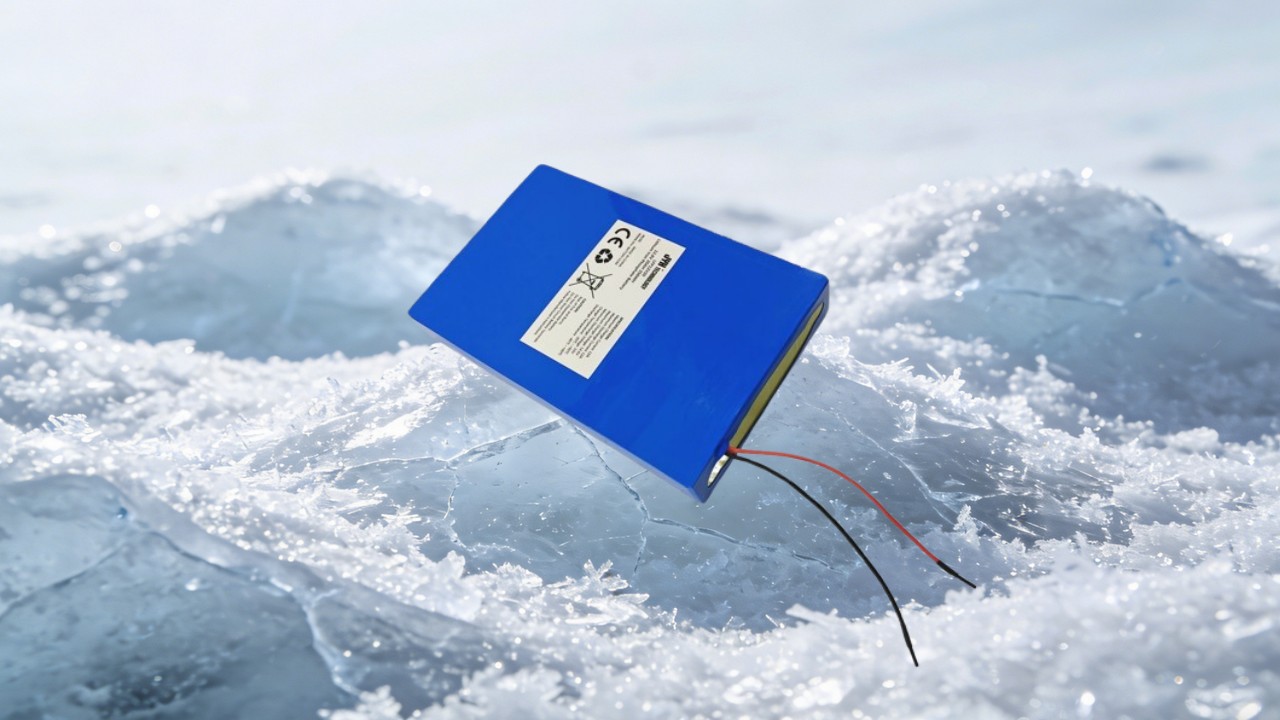
Remote monitoring equipment rarely gets the luxury of a climate-controlled enclosure. Pipeline sensors, weather stations, and outdoor industrial monitors are often installed in locations that see temperature extremes in both directions, sometimes within the same day. An Industrial sensors Lithium Titanate battery addresses this by delivering consistent output whether the ambient temperature is well below freezing or elevated by direct sun exposure.
Long cycle life is just as important here as temperature tolerance. Sensors installed in hard-to-reach locations, think pipeline right-of-ways or offshore platforms, aren't cheap to service. A cell rated for over 10,000 cycles means fewer battery swaps, fewer technician visits, and less downtime for the equipment that depends on continuous power.
The table below compares typical standard lithium-ion performance against LTO chemistry across the metrics that matter most in harsh-environment deployments.
Performance Metric | Standard Lithium-Ion | LTO Chemistry |
|---|---|---|
Discharge capacity at -20°C | Significantly reduced | Above 80% |
Discharge capacity at -40°C | Typically non-functional | Above 60% |
Cycle life at 100% DOD | 1,000–2,000 cycles | Over 10,000 cycles |
Cold-weather heating required | Often yes | No |
Plating risk during cold charging | Elevated | Minimal |
These differences explain why a lithium titanate battery is frequently specified for equipment that simply can't fail, even when the environment offers no cooperation.
Does this chemistry work in both extreme cold and extreme heat?
Yes. LTO cells maintain stable discharge performance across a wide temperature band, which is why they're used in both sub-zero cold storage applications and high-heat outdoor sensor deployments.
How does cycle life compare to standard lithium-ion cells?
LTO chemistry supports more than 10,000 cycles at 100% depth of discharge, according to JYH Technology, compared to the 1,000 to 2,000 cycles typical of standard lithium-ion cells under similar conditions.
Is additional heating equipment needed for cold-weather operation?
No. Unlike many cold-rated lithium chemistries, LTO cells don't require internal heating components to charge or discharge safely in sub-zero conditions, which simplifies overall system design.
What industries benefit most from this battery chemistry?
Cold chain logistics, pharmaceutical storage, remote industrial monitoring, and outdoor sensor networks are among the sectors that benefit most, largely due to the combination of temperature resilience and long service life.
Extreme conditions expose weaknesses that never surface in a climate-controlled lab. Equipment operators managing cold storage, remote sensors, or any application where failure carries a real cost need a power source that performs consistently, not one that requires babying through temperature swings.
Quick answer:
A lithium titanate battery is engineered to perform reliably in extreme temperature conditions, offering over 10,000 cycles at full depth of discharge and stable output as low as -40°C without heating components. Purpose-built variants, including a Cold Chain Lithium Titanate battery for temperature-sensitive logistics and an Industrial sensors Lithium Titanate battery for remote field equipment, extend that resilience to specific high-demand applications where consistent power directly affects operational outcomes.


