

Views: 0 Author: Site Editor Publish Time: 2026-08-18 Origin: Site


Cold chain logistics is unforgiving. A single gap in temperature monitoring can spoil an entire shipment of pharmaceuticals, fresh produce, or frozen food—costing businesses thousands of dollars and, in some cases, putting public health at risk. The integrity of the cold chain depends on one thing above all else: uninterrupted data.
That data comes from sensors, trackers, and monitoring devices that run on batteries. And batteries, as most engineers know, hate the cold. Standard lithium-ion cells can lose up to 20–30% of their rated capacity at 0°C, with performance degrading sharply at temperatures below -20°C. For cold chain operations that routinely expose equipment to freezer-grade conditions, this is a serious operational vulnerability.
Low temperature batteries solve this problem at the source. Purpose-built for extreme conditions, these cells maintain stable voltage output, reliable capacity, and consistent discharge rates even in deep-freeze environments. The question is not whether cold chain logistics can benefit from them—it's how significant that benefit really is.
Most commercial lithium batteries use electrolytes that become viscous at low temperatures, slowing ion transfer and reducing the battery's ability to deliver current. The result is reduced runtime, erratic voltage drops, and—in severe cases—complete shutdown of the connected device.
For cold chain logistics, this is not a theoretical concern. Refrigerated trucks, walk-in freezers, pharmaceutical storage units, and outdoor loading docks all expose monitoring hardware to temperatures that push standard batteries well beyond their safe operating range. When a battery-powered device goes offline, so does visibility into the supply chain.
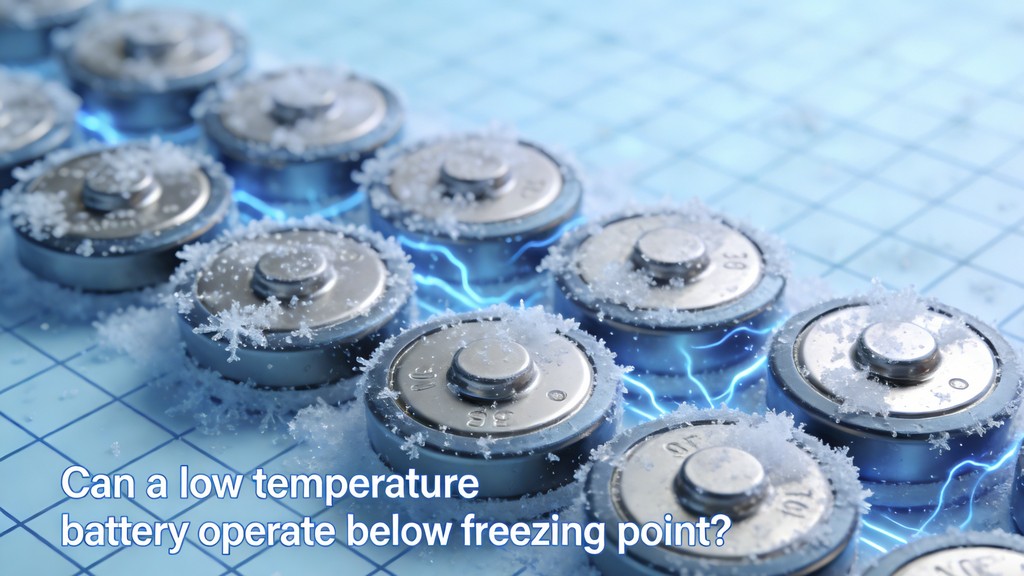
Low temperature batteries address this by using modified electrolyte formulations and electrode materials optimized for ion mobility at sub-zero temperatures. The result is a cell that performs reliably from as low as -40°C to above 60°C—covering the full operational range of most cold chain environments.
Temperature and humidity sensors are the backbone of cold chain monitoring. Positioned inside refrigerated containers, pharmaceutical cold rooms, and food processing facilities, these devices must transmit accurate data continuously. A sensor that loses power—or delivers corrupted readings due to voltage instability—creates blind spots that can go undetected until damage is already done.
Industrial sensors LiFePO4 battery configurations are particularly well-suited to this role. LiFePO4 (lithium iron phosphate) chemistry offers a flat discharge curve, meaning voltage remains stable across most of the discharge cycle. This translates to consistent sensor performance throughout the battery's life, not just at full charge. LiFePO4 cells also carry a strong safety profile—they are thermally stable and resistant to thermal runaway, an important consideration in environments where flammable goods may be stored.
The table below compares LiFePO4 performance against standard lithium-ion in cold chain conditions:
Feature | LiFePO4 (Low Temp) | Standard Li-ion |
|---|---|---|
Operating temperature range | -40°C to +60°C | -20°C to +60°C |
Capacity retention at -20°C | ~85–90% | ~60–70% |
Cycle life | 2,000–4,000 cycles | 300–500 cycles |
Thermal stability | High | Moderate |
Discharge curve | Flat | Sloped |
Self-discharge rate | Very low | Low |
GPS tracking devices monitor the location and movement of refrigerated vehicles, shipping containers, and palletized goods throughout the supply chain. Many of these devices operate in outdoor environments—loading docks in winter, unheated trailers, or during long-haul transport through cold-weather regions.
GPS trackers low temperature battery solutions must balance two competing demands: high instantaneous current draw during GPS acquisition and low standby current during idle periods. Standard alkaline or basic lithium cells often struggle with the pulse current requirements of GPS hardware, particularly in cold conditions where internal resistance rises sharply.
Low temperature lithium cells engineered for pulse discharge handle this load profile effectively. They deliver the burst current needed for GPS lock while maintaining enough capacity for extended standby operation. In practice, this can extend tracker deployment life from weeks to several months without battery replacement—a meaningful operational advantage for high-volume logistics fleets.
Cold chain facilities don't end at the freezer door. Loading docks, perimeter fencing, gate access points, and outdoor surveillance cameras all form part of the security infrastructure. In colder climates, these installations face the same battery challenges as monitoring equipment—perhaps more so, since outdoor security hardware is often solar-assisted or completely battery-dependent with limited access for maintenance.
Outdoor security low temperature battery deployments benefit from the same low self-discharge characteristics that make LiFePO4 attractive for sensors and trackers. A security camera or motion-activated alarm that sits dormant for weeks at a time needs a battery that retains its charge rather than bleeding it away through self-discharge. Low temperature lithium cells typically self-discharge at less than 3% per month, compared to 5–10% for standard alkaline batteries.
Extended cycle life also reduces the frequency of battery replacement—an important factor for outdoor installations where access may be difficult or hazardous in winter conditions.
Selecting the right low temperature battery for a cold chain application involves more than checking the minimum operating temperature on a datasheet. Key considerations include:
Discharge profile: Does the application require steady, low-current draw (sensors) or high-current pulses (GPS trackers)?
Operating temperature range: Identify the lowest temperature the device will realistically encounter, including during transport and storage.
Cycle life vs. primary cell: Rechargeable low temperature batteries suit applications with accessible charging infrastructure; primary cells suit remote or sealed deployments.
Form factor: Ensure the battery fits existing device housings without modification.
Certification requirements: Pharmaceutical and food-grade facilities may require batteries that meet specific safety or material standards.
Working with a battery supplier that specializes in low temperature chemistries—such as jyh-battery.com—helps match the right cell to each specific application rather than defaulting to a general-purpose solution.
At what temperature do standard lithium batteries fail in cold chain environments?
Standard lithium-ion batteries begin losing significant capacity around 0°C and may fail to deliver adequate current below -20°C. Purpose-built low temperature batteries maintain reliable performance down to -40°C.
Are LiFePO4 batteries safe for use in food and pharmaceutical storage environments?
LiFePO4 chemistry is thermally stable and does not contain cobalt, making it a safer option in environments where heat, fire, or chemical exposure risks must be minimized. Always verify compliance with relevant industry standards for specific applications.
Can low temperature batteries be recharged in cold environments?
Charging low temperature batteries in sub-zero conditions requires cells specifically rated for low temperature charging. Charging a standard lithium cell below 0°C risks lithium plating and permanent capacity loss. Cells rated for low temperature charging address this directly.
How often do low temperature batteries need to be replaced in cold chain monitoring devices?
Replacement frequency depends on the battery chemistry, application load, and operating conditions. LiFePO4 cells rated for 2,000–4,000 cycles can last several years in cycling applications, while primary lithium cells in low-drain sensor roles may operate for 5–10 years before requiring replacement.
Are low temperature batteries more expensive than standard options?
Per unit, low temperature batteries carry a higher upfront cost. However, extended cycle life, reduced maintenance visits, and fewer device failures typically result in lower total cost of ownership over the product's lifespan.
Cold chain logistics depends on visibility—continuous, accurate data from sensors, trackers, and security systems operating in some of the most demanding environments that battery-powered hardware faces. Standard cells simply are not built for sustained sub-zero performance. Low temperature batteries, particularly LiFePO4 chemistries, close that gap by delivering stable voltage, extended cycle life, and reliable cold weather performance across the full range of cold chain applications. For operators managing refrigerated fleets, pharmaceutical storage, or food processing facilities, upgrading to purpose-built low temperature power solutions is a direct path to fewer monitoring gaps, reduced maintenance overhead, and stronger supply chain integrity. To explore a range of low temperature battery options suited to industrial, logistics, and security applications, visit www.jyh-battery.com.
TL;DR: Low temperature batteries—particularly LiFePO4 chemistries—enable reliable power for industrial sensors, GPS trackers, and outdoor security systems in sub-zero environments. Cold chain logistics operations that depend on continuous monitoring benefit directly from batteries engineered to perform where standard lithium cells fail.


