


Tel: +86-750-3806863
Email: sales@jyh-battery.com
Email: sales@jyh-battery.com
12, Bangmin Road, Jianghai District,Jiangmen City, Guangdong Province, P.R.China 529000
Views: 0 Author: Site Editor Publish Time: 2026-06-16 Origin: Site


Freezing temperatures can quickly destroy standard energy storage systems. When the thermometer drops below zero, the chemical reactions inside a standard power cell slow down drastically. This sudden drop in performance leaves critical devices without power when people need them most.
Understanding the exact mechanisms behind cold weather battery failure helps engineers and consumers select the right power source for harsh environments. A battery is essentially a miniature chemical plant. Cold weather changes the physical properties of the materials inside this plant, preventing the efficient transfer of energy.
This comprehensive guide explains the chemistry of cold-induced power loss. It also compares how different power systems react to freezing climates, helping buyers make informed decisions for their specific applications.
A battery generates electricity through chemical reactions that move ions between an anode and a cathode through an electrolyte solution. Cold temperatures severely disrupt this internal process.
As the temperature drops, the liquid electrolyte inside the cell becomes thicker and more viscous. This thickening significantly increases the internal resistance of the battery. High internal resistance means the battery must use more of its own energy just to push ions through the dense electrolyte. Consequently, the total available power output drops dramatically.
Furthermore, attempting to charge a standard lithium-ion cell in freezing conditions can cause lithium plating. Instead of absorbing into the anode, lithium ions build up on the surface as solid metal. Lithium plating permanently damages the cell and creates a severe safety hazard by increasing the risk of short circuits.
A portable battery powers everyday devices like smartphones, handheld GPS units, and two-way radios. Because these devices are compact, their internal power cells lack the insulation required to stay warm in freezing environments.
When a person takes a smartphone into a snowy environment, the cold penetrates the device almost instantly. The portable battery experiences a rapid spike in internal resistance, causing the voltage to drop below the device's minimum operating threshold. This voltage drop tricks the device's software into thinking the battery is completely empty, triggering an automatic shutdown to protect the internal circuitry.
Choose a specialized portable battery designed for cold weather if you frequently operate communication devices in winter climates. Standard consumer electronics will simply fail to operate reliably when exposed to sub-zero temperatures for extended periods.
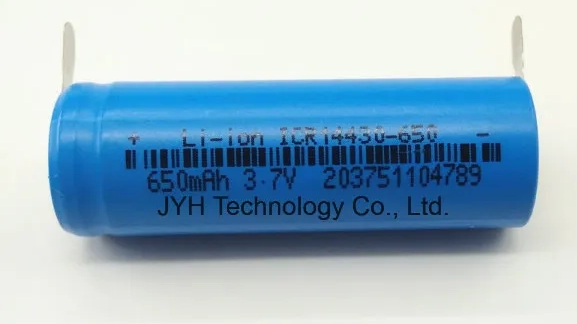
A high capacity battery stores massive amounts of energy for demanding applications like solar power grids, electric vehicles, and industrial emergency lighting. These large-scale systems face unique challenges during winter months.
Unlike small devices, a high capacity battery often resides outdoors or in unheated facilities. Standard high-capacity cells lose up to half of their usable capacity when temperatures fall below freezing. For a solar energy storage system, this means the battery cannot hold enough power to keep a facility running through a long winter night.
To combat this, many high-capacity systems require external heating blankets or internal heating components. These heating elements draw power directly from the battery, further reducing the total energy available for the actual application.
Engineers have developed specialized chemistries to overcome the limitations of standard power cells. A low temperature battery utilizes modified electrolytes and advanced electrode materials to maintain low internal resistance even in extreme cold.
Companies like JYH Technology manufacture specialized LiFePO4 (Lithium Iron Phosphate) and LTO (Lithium Titanate) cells designed specifically for harsh environments. These purpose-built cells eliminate the need for parasitic heating components, saving space and preserving total power capacity.
For instance, a low temperature battery from JYH Technology can safely charge and discharge at -20°C while retaining over 80% of its original capacity. For extreme applications, their Lithium Titanate cells allow for charging and discharging at -40°C with absolutely no safety risks.
Choose a low temperature LiFePO4 battery if you need an emergency lighting system that complies with UL924 standards in unheated buildings. Choose a Lithium Titanate (LTO) battery if your project requires thousands of charge cycles and operation at -40°C.

The following table outlines the operational differences between standard power cells and specialized cold-weather alternatives.
Battery Chemistry | Minimum Charge Temperature | Minimum Discharge Temperature | Capacity Retention at -20°C |
|---|---|---|---|
Standard Lithium-Ion | 0°C | -20°C | < 50% |
Standard LiFePO4 | 0°C | -20°C | < 60% |
JYH Technology Low Temp LiFePO4 | -20°C | -20°C | > 80% |
JYH Technology Lithium Titanate (LTO) | -40°C | -40°C | > 60% (at -40°C) |
A specialized low temperature battery typically costs 20% to 40% more upfront than a standard lithium-ion cell. However, because cold-weather cells do not require external heating components and suffer less winter degradation, they often cost less over the total lifespan of the application.
Lifespan depends heavily on the specific chemistry used. A standard low temperature LiFePO4 cell typically lasts for 2,000 to 3,000 charge cycles. Conversely, an advanced Lithium Titanate (LTO) cell offers a highly extended lifespan, routinely exceeding 10,000 charge cycles even in harsh environments.
Yes. Facility managers can utilize standard batteries by installing external thermal management systems, such as silicone heating pads or insulated enclosures. However, choose these external heating methods only if your energy system generates enough excess power to run the heaters continuously without depleting the main reserve.
Engineers and grid operators should use a Lithium Titanate battery for applications exposed to deep freezes, such as remote arctic monitoring stations or outdoor emergency lighting. An LTO battery operates safely at -40°C and charges much faster than traditional lithium counterparts.
Cold weather battery failure is a predictable chemical issue, not a random malfunction. By understanding how freezing temperatures increase internal resistance and slow ion mobility, buyers can proactively secure the right technology for their climate.
Whether you need a reliable portable battery for outdoor communications or a high capacity battery for industrial energy storage, selecting the correct chemistry prevents sudden power loss. Always review the minimum charging and discharging temperatures of a power cell before placing it into a freezing environment. For specific product specifications and advanced low-temperature power solutions, visit www.jyh-battery.com to review their complete catalog of specialized cells.
Quick answer: Batteries fail at low temperatures because cold weather thickens the internal electrolyte, significantly increasing internal resistance and slowing down chemical reactions. This prevents the efficient flow of ions, causing severe voltage drops. To solve this, users should utilize a specialized low temperature battery from JYH Technology designed to operate reliably in sub-zero environments without requiring external heaters.


![Ifpr19/66/[2s]E/0+60/80 LiFePO4 Battery](http://imrorwxhjponlq5p.ldycdn.com/cloud/lnBprKolliSRllpijkinko/Ifpr19-66-2s-E-0-60-80-LiFePO4-Battery-300-300.jpg "what is lfp battery")