


Tel: +86-750-3806863
Email: sales@jyh-battery.com
Email: sales@jyh-battery.com
12, Bangmin Road, Jianghai District,Jiangmen City, Guangdong Province, P.R.China 529000
Views: 0 Author: Site Editor Publish Time: 2026-06-18 Origin: Site


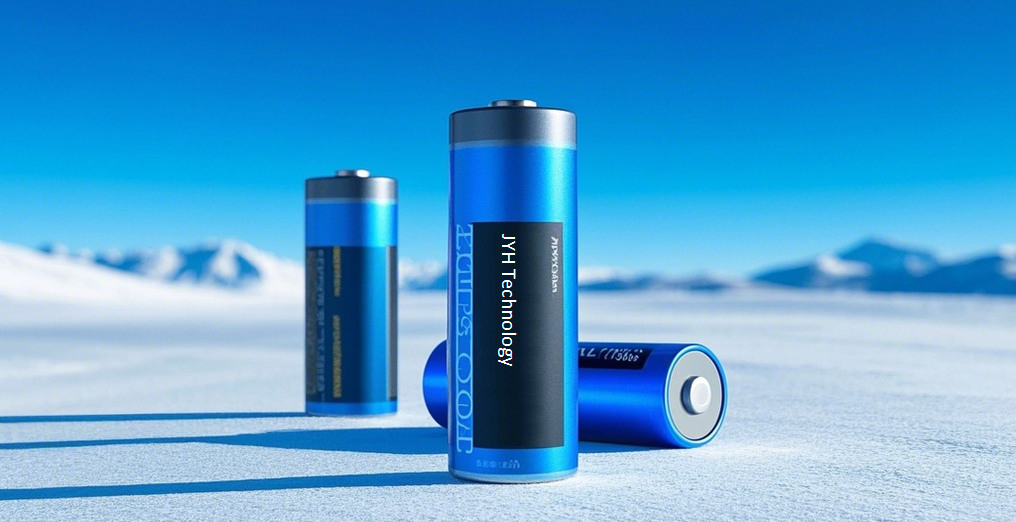
The demand for reliable energy storage in harsh environments has driven significant innovation in battery technology. Among these advancements, the wide temperature battery has emerged as a critical solution for applications exposed to extreme cold or heat. This article examines whether a wide temperature lithium iron phosphate battery can be effectively charged in very cold or hot conditions, comparing its performance to a Standard LiFePO4 battery.
A Standard LiFePO4 battery offers excellent thermal stability and safety compared to other lithium-ion chemistries. However, its charging capability is significantly constrained by temperature. The recommended charging temperature range for a standard lithium iron phosphate battery is typically between 0°C and 45°C .
Charging a standard LiFePO4 battery below 0°C poses serious risks. At sub-zero temperatures, the movement of lithium ions within the battery slows dramatically, which can lead to lithium metal plating on the anode surface. This forms dendrites that may pierce the battery separator, causing internal short circuits, thermal runaway, or even fires . To prevent this, most Battery Management Systems (BMS) automatically disable charging when temperatures fall below freezing . While a Standard LiFePO4 battery can often still be discharged in cold conditions, charging is strictly prohibited for safety reasons.
At high temperatures above 45°C, the performance and longevity of a standard battery degrade. While charging may still be possible, the increased internal stress accelerates capacity loss and shortens the overall cycle life . This limitation makes standard LiFePO4 batteries unsuitable for applications in harsh climates without additional thermal management systems.
A wide temperature battery addresses these limitations through advanced electrolyte formulations and electrode designs. Recent developments, such as all-fluorinated electrolytes, have enabled lithium iron phosphate batteries to operate and charge across a much broader temperature spectrum . These technologies optimize the solvation environment of lithium ions, allowing stable charging even at -20°C and discharge capabilities down to -30°C .
The key distinction lies in the internal chemistry. While a Standard LiFePO4 battery relies on conventional carbonate-based electrolytes that become viscous and less conductive in the cold, a wide temperature variant uses specialized electrolytes to maintain ion mobility and reduce internal resistance. This allows the battery to accept a charge safely in sub-zero conditions without the lithium plating that plagues standard designs .
However, performance in extreme heat also differs. A wide temperature battery is designed to maintain structural and chemical stability at elevated temperatures, preventing the rapid degradation seen in standard batteries. Some advanced designs have demonstrated stable cycling at 80°C . Nevertheless, the charging rate often needs to be adjusted—pulse charging has shown benefits over the conventional constant current-constant voltage (CC-CV) method for maintaining capacity retention at high temperatures .
The following table summarizes the key charging differences between a wide temperature battery and a Standard LiFePO4 battery under extreme conditions:
| Feature | Standard LiFePO4 Battery | Wide Temperature Battery |
Standard Charging Temp Range | 0°C to 45°C | -20°C to 45°C (or wider) |
Charging Below 0°C | Not permitted (high safety risk) | Permitted (with controlled rate) |
Charging Above 45°C | Possible but accelerates degradation | Possible, with better thermal stability |
Performance at -20°C | Charging blocked by BMS | Stable cycling achievable |
Performance at 80°C | Not recommended | Demonstrated stable operation |
Cycle Life Impact | Severe degradation outside standard range | Reduced impact through optimized chemistry |
Conclusion
A wide temperature battery based on lithium iron phosphate chemistry can indeed be charged in very cold or hot conditions where a Standard LiFePO4 battery would fail or face severe restrictions. Through advanced electrolyte engineering and electrode design, these batteries offer a solution for demanding applications. While a standard battery generally limits charging to a narrow 0°C to 45°C window to prevent lithium plating and thermal degradation, the wide temperature variant can safely operate from -20°C for charging and even lower for discharging .
However, it is essential to note that charging in extreme temperatures still requires careful management. Lower temperatures necessitate reduced charging currents to maintain safety, and high temperatures require strategies like pulse charging to preserve battery health . The choice between a wide temperature and a standard battery depends entirely on the specific environmental conditions of the intended use. For applications in harsh climates without precise temperature control, the wide temperature battery represents a superior, safer, and more reliable choice.


